

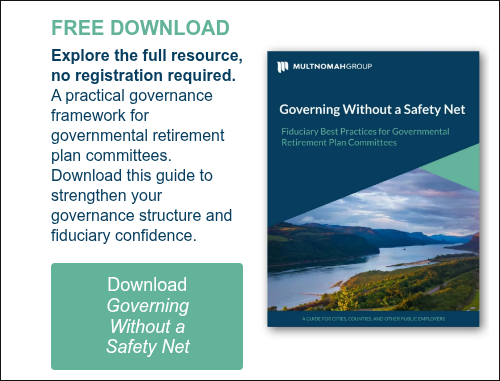
In "Governing Without a Safety Net," we explain how thoughtful governance frameworks—clear charters, documented processes, disciplined investment oversight, and continuous learning—help retirement plan committees:
Govern with confidence
Protect participants
Defend decisions with evidence
Navigate fiduciary responsibility with clarity
This guide is designed to help committees build structure equal to the responsibility they carry.
Build a governance structure that supports fiduciary accountability
Use documentation to strengthen decision‑making and oversight
Establish disciplined investment review and monitoring practices
Align committee processes with participant outcomes
Reduce risk through clarity, structure, and evidence‑based governance
Why is governance so important in governmental retirement plans?
Governmental plan participants often have limited personal savings and rely heavily on plan outcomes. Strong governance ensures decisions are made consistently, transparently, and in participants’ best interests.
Is governance just about rules and compliance?
No. Effective governance is a practical framework that enables better decisions—not a bureaucratic checklist.
How does governance protect fiduciaries?
Clear processes, documentation, and investment discipline help committees demonstrate prudence and defend decisions if questioned.
Multnomah Group is a registered investment adviser registered with the Securities and Exchange Commission. Any information contained herein or on Multnomah Group’s website is provided for educational purposes only and does not intend to make an offer or solicitation for the sale or purchase of any specific securities, investments, or investment strategies. Investments involve risk and, unless otherwise stated, are not guaranteed. Multnomah Group does not provide legal or tax advice.