


Strong fiduciary governance is essential for retirement plan sponsors to ensure legal compliance, manage risks, maintain accountability and transparency, monitor performance, build participant confidence, improve operational efficiency, and limit liability. This foundation ultimately leads to a sustainable retirement plan.
How we help you develop and maintain a strong fiduciary foundation:
Establishment of Governance Structure
Multnomah Group provides support for clients in the establishment of a governance structure to oversee the retirement plan. This includes initial education to key stakeholders on fiduciary responsibilities, the discussion of different governance models and best practices in committee governance, and support for the initial committee development.
Governance Documents
Multnomah Group provides support for the development and review of fiduciary governance documents. On an ongoing basis, we will periodically review the governance documents (committee charter and investment policy statement) to update them for evolving best practices and to confirm they still reflect the intentions and operational practices of the City.
Meeting Minutes
As part of our core services, we prepare meeting agendas and meeting minutes for your committee. The minutes document the discussion and decisions of the committee and also track action items assigned to committee members, your plan's vendor(s), and Multnomah Group.
Fiduciary Training Program
We have developed formal training materials for new committees and their members. The focus of those training materials is fiduciary responsibility and best practices in fiduciary governance. Our proprietary fiduciary training curriculum is structured to maintain and develop the committee members' knowledge over time.

Alongside our services designed to assist plan sponsors with their fiduciary responsibilities, we create and share resources throughout the year to help you manage the challenges associated with your retirement plan benefit programs.
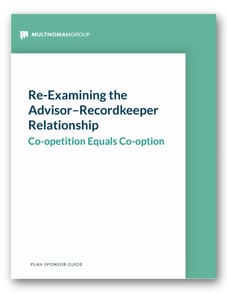 |
Re‑Examining the Advisor– Recordkeeper Relationship: What Every Plan Sponsor Needs to Know The retirement plan provider landscape has shifted. Recordkeepers are no longer just administrators—they’re expanding into managed accounts, rollovers, financial wellness, and wealth management services that increasingly overlap with the traditional advisor role. While often framed as “co‑opetition,” these relationships can quietly erode advisor independence and drive higher participant costs. If you are responsible for selecting or overseeing retirement plan providers, this guide equips you with practical questions, clear warning signs, and a framework for evaluating advisor independence in today’s evolving market. Download the free guide. |
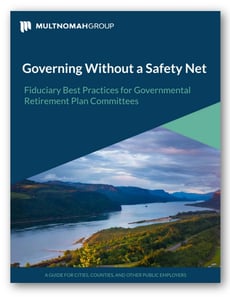 |
Governing Without a Safety Net Governmental deferred compensation plans operate without a safety net. For many participants, these plans represent their most important financial institution, and often their only path to retirement security. In "Governing Without a Safety Net," we explain how thoughtful governance frameworks—clear charters, documented processes, disciplined investment oversight, and continuous learning—help retirement plan committees: govern with confidence, protect participants, defend decisions with evidence, and navigate fiduciary responsibility with clarity. Download the free guide. |
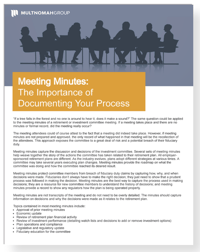 |
Meeting Minutes: The Importance of Documenting Your Process Meeting minutes capture the discussion and decisions of the investment committee. Several sets of meeting minutes help weave together the story of the actions the committee has taken related to their retirement plan. All employer sponsored retirement plans are different. As the industry evolves, plans adopt different strategies at various times. A committee may take several years executing plan changes. Meeting minutes provide the roadmap on what the committee was doing and how the committee reached its desired result. Download the resource. |
Senior Consultant and Director of ERISA Technical Services

Principal & Director of Client Services
Managing Principal
Principal